Names & categories
Generic vs brand, prescription vs over the counter.
Learning medications by category
Medications in the same category (class) usually work the same way, so they share therapeutic effects, adverse reactions, contraindications and administration points. It's easier to learn the category than hundreds of single drugs. The prototype is the drug in the category that providers prescribe most, and it's the one to know in the most detail.
Generic vs brand (trade) names
Generic
- The "official" name, given by the company that first develops the drug
- Always written in lowercase
- Only one generic name per medication
- Same chemical composition (active ingredient) as the brand-name drug
- Usually less expensive
Brand / trade
- The commercial (proprietary) name a manufacturer gives it
- Capitalized, often with ® after it.
- One drug can have several brand names (ibuprofen, a pain and fever reliever, is ADVIL, MOTRIN, NUPRIN…)
- The FDA (U.S. Food and Drug Administration) has confirmed therapeutic equivalence with the generic
- A drug starts out under its brand name while it's protected by a patent. Once the patent expires, other companies can make a generic form.
- Generic and brand forms have the same chemical composition and the same effects, and there's no difference in the potential for abuse or dependence. With the provider's OK, the generic can be substituted for the brand.
- On a label, the brand name is usually large and bold; the generic name is smaller, often under it or in parentheses. Drugs also have chemical names, which are rarely used.
| Generic | Brand / trade | Used for |
|---|---|---|
| acetaminophen | TYLENOL® | Pain and fever |
| ibuprofen | MOTRIN®, ADVIL® | Pain, fever and inflammation |
| docusate sodium | COLACE® | Stool softener (constipation) |
| hydromorphone | DILAUDID® | Opioid for severe pain |
| pantoprazole | PROTONIX® | Lowers stomach acid |
| lansoprazole | PREVACID® | Lowers stomach acid |
| diphenhydramine | BENADRYL® | Allergies (antihistamine) |
| loratadine | CLARITIN® | Allergies (antihistamine) |
Think in generic names. Each drug has one generic name but may have many brands, so learn and chart the generic; when a brand name comes up, match it to its generic.
Labels often print the generic name in capitals (LANSOPRAZOLE here). When you write it, the generic name is lowercase: lansoprazole.
Prescription vs over the counter
Safety decides which group a drug is in.
Prescription (Rx)
- The FDA identified it as potentially harmful if taken without medical supervision
- Needs a prescription from a licensed provider (physician, nurse practitioner, physician assistant)
- Examples: antibiotics (ceftriaxone), antihypertensives (captopril), diuretics (furosemide), opioid analgesics (fentanyl)
Over the counter (OTC)
- The FDA designated it relatively safe to take without supervision
- Bought in stores, pharmacies or online
- Examples: acetaminophen and ibuprofen (pain and fever), diphenhydramine and loratadine (allergies), cimetidine (TAGAMET®, lowers stomach acid)
As more is learned about a drug over time, a prescription drug can be moved to over the counter.
Count vitamins, supplements and herbal remedies as medications, even though the FDA doesn't regulate them. They can interact with prescribed drugs or be taken wrong and cause more harm than good, so always ask about them in the medication history.
Clients sometimes bring their own medications from home. Those go to the hospital pharmacist to approve before they're used.
Quick check
How many generic names can a medication have?
One. It can have several brand names.
A client asks whether the generic is weaker than the brand. What's true?
No. The generic has the same chemical composition and the same effects, and the same abuse potential. It's usually cheaper.
A drug has three brands on the market. Which name should you learn it by?
The generic name: there is only one, and it stays the same whatever the brand.
Why ask about herbal supplements?
They count as medications and can interact with prescribed drugs, even though the FDA doesn't regulate them.
Forms & routes
Pharmaceutics: how the form of a drug changes how fast it works.
Pharmaceutics
Pharmaceutics is the science of how a medication's form affects how it dissolves, how fast it's absorbed and so how soon it starts to work.
| Route | Where it goes | Examples |
|---|---|---|
| Oral (PO, by mouth) | Swallowed and absorbed in the GI (gastrointestinal) tract | Tablets, capsules, liquids such as acetaminophen (for pain and fever) or amoxicillin (an antibiotic) suspension |
| Sublingual (SL) | Under the tongue | Nitroglycerin tablets for chest pain |
| Buccal | Between the cheek and gum | Buccal tablets and films (for example, some pain or nausea medications) |
| Intramuscular (IM) | Into a muscle | Flu shot, epinephrine for anaphylaxis |
| Subcutaneous (SQ or SubQ) | Into the fatty tissue under the skin | Insulin (lowers blood glucose); heparin and enoxaparin (anticoagulants) |
| Intravenous (IV) | Straight into a vein | IV antibiotics such as vancomycin, IV fluids |
| Topical / transdermal | On the skin | Creams and ointments (local effect); patches such as nicotine (to help quit smoking) or fentanyl (an opioid for pain), which have a systemic effect |
| Mucous membranes | Eyes, ears, nose, throat | Eye drops, ear drops, nasal spray, throat lozenges |
| Rectal / vaginal | Rectum or vagina | Acetaminophen (fever and pain) or bisacodyl (a laxative) suppositories; antifungal vaginal cream |
| Inhaled | Into the lungs | Albuterol inhaler, nebulizer treatments |
Routes are grouped as parenteral (by injection: IM, subcutaneous, intradermal, IV, intrathecal, epidural) and nonparenteral (oral, sublingual, buccal, topical, transdermal, eye, ear, nose, rectal, vaginal).
Oral forms that change how a drug is released
| Form | What it does |
|---|---|
| Enteric-coated (EC) | Coating doesn't dissolve until the tablet reaches the small intestine, which protects the stomach lining |
| Extended release (ER, XL, XR), sustained release (SR), sustained action (SA) | Releases the drug slowly over time, often 12 to 24 hours, so it can be dosed once or twice a day |
| Immediate release | Releases the drug right after it's swallowed |
| Orally disintegrating tablet (ODT) | Dissolves in the mouth |
| Scored tablet | Has a line across the middle so it can be split into two equal parts |
Never crush capsules or extended- or sustained-release forms. (The full do-not-crush list is in Giving oral meds.)
Injections: how fast they're absorbed
| Route | Absorption | Onset |
|---|---|---|
| IV | Immediate and complete | Immediate |
| Subcutaneous and IM |
| Varies |
Topical and transdermal drugs deliver a steady amount over a long time: slower onset and longer duration than oral or injected drugs.
Quick check
Where does a buccal medication go?
Between the cheek and gum.
Why is a tablet enteric-coated?
So it dissolves in the small intestine instead of the stomach, which protects the stomach lining.
Which route has immediate and complete absorption?
IV.
A client with poor circulation gets a subcutaneous injection. What happens to absorption?
It's slower.
Pharmacokinetics
What the body does to the drug: ADME.
ADME
Pharmacokinetics is how a medication moves through the body: Absorption, Distribution, Metabolism, Excretion.
| Phase | Question | Definition |
|---|---|---|
| Absorption | How does it get in? | Movement from the site of administration into the bloodstream |
| Distribution | Where does it go? | Movement by the circulation (body fluids) to the site of action |
| Metabolism | How is it broken down? | Change into a more or less active, more water-soluble or inactive form, mostly by liver enzymes |
| Excretion | How does it leave? | Removal of the drug or its metabolites, mostly by the kidneys |
ADME, in order: the drug gets in, gets around, gets broken down, gets out.
Absorption
How fast a drug is absorbed decides how soon it works; how much is absorbed decides how strong the effect is. The route changes both.
| Route (fastest first) | How quickly and how it gets in | What slows it or gets in the way |
|---|---|---|
| IV |
| Nothing to cross, but the client needs IV access |
| Inhaled (mouth, nose) | Fast, through the capillaries around the alveoli (air sacs) |
|
| Sublingual, buccal | Fast, through the blood-rich lining of the mouth | Swallowed before it dissolves, it meets stomach acid, which can inactivate it |
| Subcutaneous, IM |
| Little in the way: the capillary walls have wide gaps between cells |
| Rectal, vaginal | Absorbs easily; works locally and through the body | Stool or infected discharge keeps the drug from touching the lining |
| Oral | Varies a lot with:
|
|
| Intradermal, topical |
|
|
Distribution
- Circulation: anything that cuts blood flow (peripheral vascular disease, heart disease) delays distribution.
- Cell membrane permeability: the drug must pass through tissues to reach its target. The blood-brain barrier and the placenta let through drugs that dissolve in fat or that a carrier moves across.
- Plasma protein binding: drugs bind to proteins in the blood, mainly albumin. Only the unbound drug can leave and act. Two drugs competing for the same binding sites can cause toxicity, and low albumin (malnutrition, older age) leaves more free drug circulating.
Metabolism
Metabolism happens through enzymes, primarily in the liver. It also happens in the kidneys, lungs, intestines and blood.
Also called biotransformation: the drug's structure is changed, and the new form is a metabolite.
What affects metabolism
- Age: the body slows down. Liver metabolism tends to drop with age, so older adults often need smaller doses to avoid buildup. Infants also metabolize less.
- Similar metabolic pathways: two drugs broken down the same way compete, so one or both build up. Spacing them apart can help.
- Nutritional status: malnutrition (and dehydration) can leave the body short of what it needs to make metabolizing enzymes.
- More metabolizing enzymes (from some drugs): breaks the drug down faster, so the dose may need to go up.
- First-pass effect (below).
First-pass effect
Oral drugs go from the intestines straight to the liver first, which breaks down part of the dose before it reaches the rest of the body. That reduces how much active drug is left, and it's one reason a provider may choose IV over PO.
Swallowed (oral):
Routes that skip the liver:
The liver gets the first pass at everything absorbed from the gut, so less active drug is left for the rest of the body.
Routes that bypass the first-pass effect: sublingual, buccal, IV, nasal, inhaled, transdermal and other injected routes. They reach the bloodstream without going through the liver first. Drugs with a high first-pass effect need one of these nonenteral routes. It's also why an oral dose is often higher than the IV dose of the same drug.
Outcomes of metabolism
- Inactivates most drugs and makes them easier for the kidneys to excrete
- Activates prodrugs into their active form
- Can raise or lower the therapeutic effect, and raise or lower toxicity
Excretion
- The kidneys are the main site (urine).
- Also the liver (bile), lungs (exhaled), intestines (bowel) and exocrine glands (sweat, saliva, breast milk).
- Excretion prevents toxic buildup and keeps the drug level balanced.
- Factors to consider: dehydration, kidney problems, bowel problems. Drugs that are harmful as they're excreted need careful handling.
- Poor kidney function makes a drug last longer and act stronger, so monitor BUN (blood urea nitrogen) and creatinine. Doses may be lowered for kidney impairment, common in older adults.
- Drugs excreted in breast milk can reach a breastfeeding infant.
Other ways drugs leave the body (besides the kidneys):
- Lungs (breathed out)
- Bile, into the stool
- Sweat and saliva
- Breast milk
Higher or lower dose?
May need a higher dose
- More metabolizing enzymes (drug broken down faster)
- Faster renal excretion
- Poor distribution, such as peripheral vascular disease
May need a lower dose
- Liver failure
- Kidney impairment
- Another drug using the same metabolic pathway
- Malnutrition
- Older age
Quick check
Where does most drug metabolism happen?
The liver.
Why might a provider order a drug IV instead of PO?
An oral drug goes through the liver first (first-pass effect), which reduces how much active drug reaches the body. IV skips the liver.
Name two routes that bypass the first-pass effect.
Any two of sublingual, buccal, IV, nasal, inhaled or transdermal.
Which two labs show how well the kidneys excrete drugs?
BUN and creatinine.
A client has low albumin. What happens to a protein-bound drug?
More of it is unbound and active, so the risk of toxicity goes up.
Half-life & drug levels
How long a drug lasts, and how levels are checked.
Half-life
Each half-life cuts what's left in half.
- Half-life (t½) is the time it takes for the amount of drug in the body to drop by 50%.
- It depends on metabolism and excretion, so liver and kidney function change it. Age and fever can change it too.
- It usually takes 4 half-lives to reach a steady (therapeutic) concentration, when intake equals what's metabolized and excreted.
Short half-life
- Leaves the body fast (about 4 to 8 hours)
- Given often, several times a day, or the level drops below the effective level between doses
Long half-life
- Leaves slowly (more than 24 hours), so it can build up and become toxic
- Given less often, often once a day
- Takes longer to reach steady state
Example: phenobarbital, a seizure medication, has a half-life of about 4 days, so it's given once a day.
Long life, long gap. A long half-life means a long time between doses.
Therapeutic range and index
- Doses aim to keep the blood level between the minimum effective concentration and the toxic concentration. In between is the therapeutic range: effective, not toxic.
- Therapeutic index (TI): the ratio of the toxic dose to the therapeutic dose, a measure of the safety margin.
- High TI: wide safety margin; no routine blood-level checks.
- Low TI: narrow margin; levels need close monitoring.
- Plateau: the drug's blood level during a series of doses.
Peak and trough levels
The trough is drawn just before the next dose; the peak is the highest point after a dose.
Peak
- The highest level in the blood
- Timing depends on the route: oral peaks about 1 to 3 hours after a dose; IV can peak within 10 minutes (check a drug reference or the pharmacist)
- The drug's full effect should line up with its peak level
Trough
- The lowest level in the blood
- Draw the blood sample immediately before the next dose, whatever the route
Peaks and troughs are checked for drugs that have to stay at a steady therapeutic level to work, such as some antibiotics.
Picture a feeding trough: you check how low it’s gotten right before you fill it again. A peak is the top of the mountain.
Onset, peak and duration
| Term | Meaning |
|---|---|
| Onset of action | Time for the drug to start a therapeutic response |
| Peak effect | Time for the drug to reach its full therapeutic effect |
| Duration of action | How long the therapeutic effect lasts without another dose |
| Termination of action | When the effect ends |
Quick check
When do you draw a trough level?
Immediately before the next dose.
A drug has a long half-life. How often would you expect to give it?
Less often, usually once a day.
A drug has a low therapeutic index. What does that mean for the nurse?
A narrow safety margin, so blood levels need close monitoring.
How many half-lives does it usually take to reach a steady level?
About 4.
Pharmacodynamics
What the drug does to the body.
Agonists and antagonists
Pharmacodynamics is the interaction between a medication and target cells, body systems or organs to produce an effect. Drugs act on receptors, their target sites on or in cells.
| Type | What it does | Examples |
|---|---|---|
| Agonist | Binds to a receptor and activates it, mimicking the body's natural process |
|
| Antagonist | Blocks the usual receptor activity, working against a body process |
|
| Partial agonist | Binds to and activates a receptor, but only partly, for a blunted effect (about 10 to 40% of the full effect) |
|
- Competitive antagonists compete with the agonist for the receptor. Higher doses lower the agonist's effect but rarely block it completely.
- Noncompetitive antagonists block the agonist's access to the receptor. High enough doses can block the response completely.
- Selective drugs act on fewer receptors, so the effects are more limited; less selective drugs cause more widespread effects.
- Some drugs change the cell environment instead: penicillins stop bacteria from building cell walls; sulfa drugs stop bacteria from using folic acid to make DNA and RNA.
Agonist = "Go" (turns the receptor on). Antagonist = "Anti" (blocks it). Partial = part way.
Expected action and therapeutic uses
- The expected pharmacologic action is what the drug does in the body. The indication is the condition it's prescribed for.
- Acetaminophen blocks the chemical messengers that tell the hypothalamus to raise core temperature, so a therapeutic use is reducing fever.
- Many drugs have more than one use:
- Sildenafil (VIAGRA®) relaxes blood vessels and increases blood flow, so it's also used for pulmonary hypertension.
- Diphenhydramine treats allergies (antihistamine), and is also used for motion sickness (antiemetic), sleep (sedative) and Parkinson's disease (anticholinergic).
- Whether an effect is therapeutic depends on why the drug is given. The same drowsiness from a sedating antihistamine is an unwanted effect when it's taken for allergies, but it's the therapeutic effect when it's taken for sleep.
- A drug reference's indications section lists the conditions a drug is used for, including any second uses.
If you're not sure why a client is getting a medication, ask before you give it.
Quick check
Morphine activates opioid receptors. Is it an agonist or an antagonist?
An agonist.
Metoprolol blocks cardiac beta receptors. What type of drug is it?
An antagonist (beta blocker).
Why is buprenorphine called a partial agonist?
It activates opioid receptors only partly: enough to stop withdrawal and cravings, without the high.
What's an indication?
The condition a drug is prescribed to treat.
Effects & reactions
Adverse reactions, anaphylaxis, tolerance and toxicity.
Adverse drug reactions (ADRs)
- Therapeutic effect: the intended effect.
- Adverse drug reaction: a nontherapeutic, unintended effect that happens at a therapeutic dose. It can happen at any time, and ranges from annoying to life-threatening.
- Example: lisinopril for blood pressure can cause a dry, nonproductive chronic cough or angioedema (swelling of the lips, tongue and face).
- Diphenhydramine commonly causes dry mouth and drowsiness; in some older adults, confusion, poor coordination, dizziness or seizures.
- Paradoxical effect: the opposite of the intended effect, such as a sedative causing excitement.
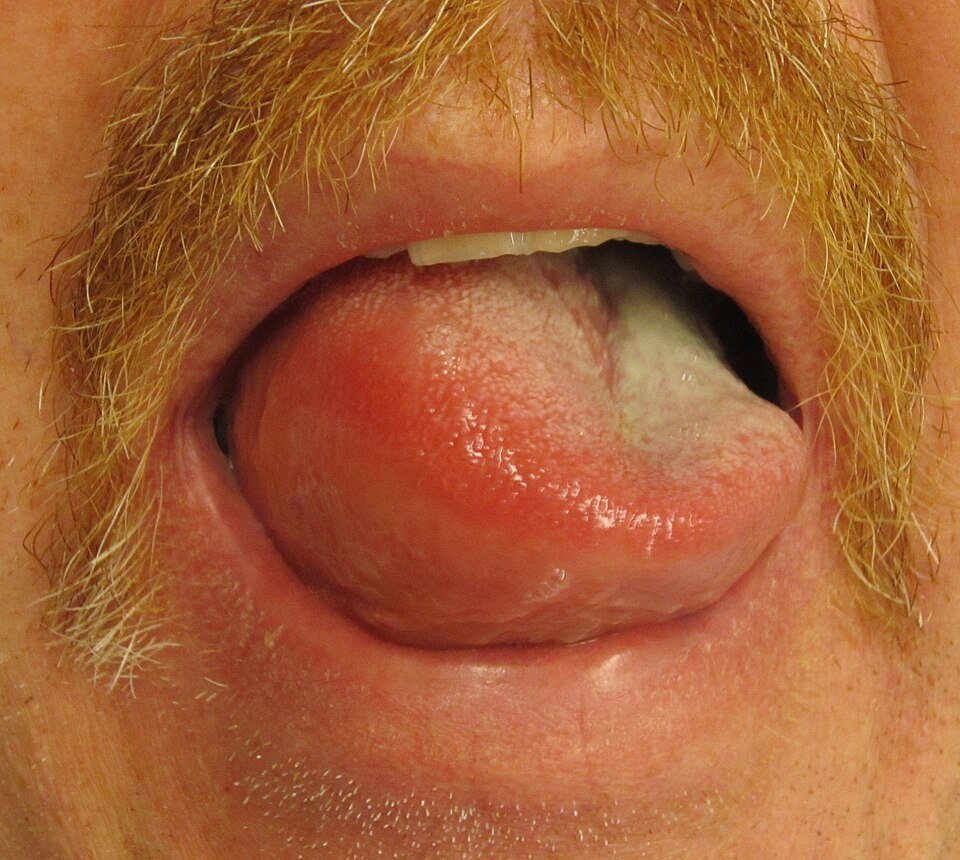
Allergic reactions and anaphylaxis
An allergic reaction is the most severe type of ADR. It can be mild (itching, rash, hives) or life-threatening. After even a mild reaction, the client should avoid the drug: the next exposure can bring a worse reaction.
Anaphylactic shock is the body's exaggerated immune response to a drug: a massive release of histamine. It's a medical emergency that can start almost immediately and progress from mild to severe.
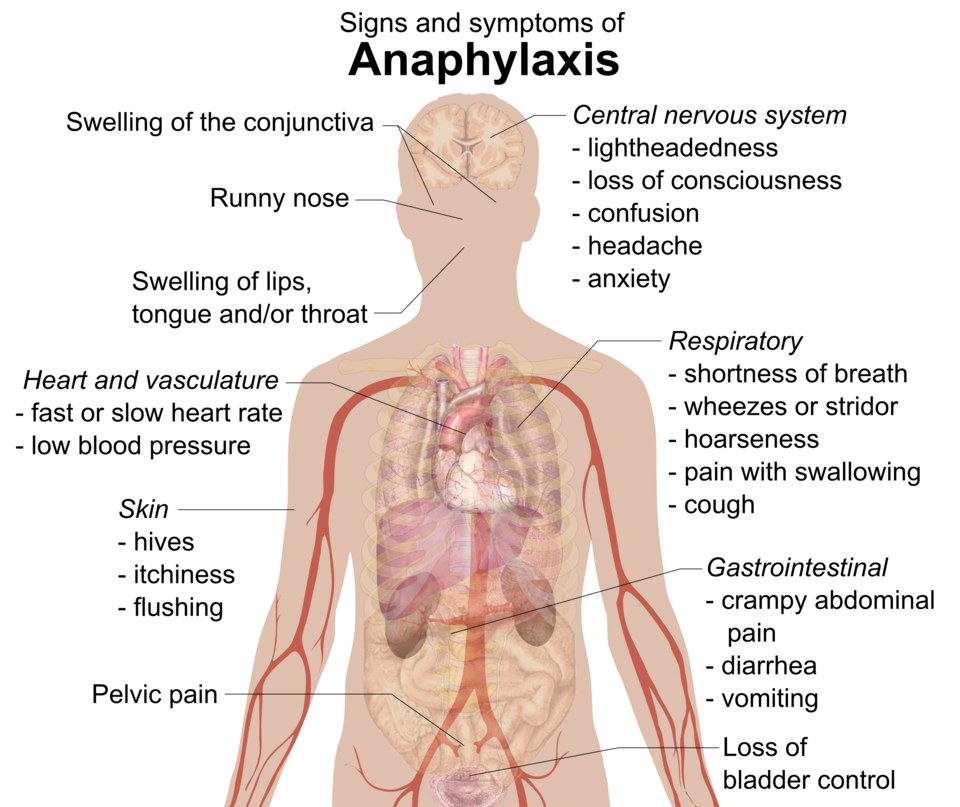
| Area | Signs |
|---|---|
| Airway | Coughing, shortness of breath, wheezing, stridor, chest tightness, throat tightening, trouble swallowing |
| Heart and circulation | Fast heart rate, very low blood pressure, weak pulse, faintness, pale or blue color, shock, loss of consciousness; can lead to cardiac arrest |
| Skin | Hives, swelling of the eyes, face, mouth and throat, itching, widespread redness, warmth |
| Brain | Anxiety, confusion, headache, feeling that something bad is about to happen |
| Stomach | Nausea, vomiting, diarrhea, cramps |
Treatment
- Establish the airway
- Oxygen
- Epinephrine IM: raises blood pressure and opens the airways
- Diphenhydramine (an antihistamine): blocks histamine's effects and eases hives and itching; it comes after epinephrine because it can't reverse a closing airway or low blood pressure
Epinephrine is given IM for anaphylaxis. Listen for stridor: it's usually one of the first signs of anaphylaxis, and it means the airway is closing.
Tolerance, dependence and toxicity
| Term | Meaning |
|---|---|
| Tolerance | The body responds less to a drug over time, so a higher dose is needed for the same effect (common with long-term opioids) |
| Dependence | A physical or psychological need for a drug. Stopping it can cause withdrawal. |
| Cumulative effect | The body can't metabolize and excrete one dose before the next is given (often from liver or kidney impairment), so the drug builds up |
| Toxicity | Harm from too much drug: an excessive dose, or poor excretion letting it build up. Can be permanent or life-threatening. |
- Ototoxic drugs harm cranial nerve VIII (hearing and balance): watch for ringing in the ears, hearing loss and dizziness.
- Hepatotoxic drugs harm the liver: watch for yellow skin or eyes (jaundice), dark urine and pain in the upper right abdomen.
- To prevent toxicity: the lowest effective dose, periodic blood levels, watching for signs of toxicity, and adjusting doses for liver or kidney problems.
Quick check
A client goes into anaphylaxis after a first dose. Is that an adverse effect or toxicity?
An adverse effect (an allergic reaction at a therapeutic dose). Toxicity comes from too much drug.
Which drug, by which route, raises blood pressure and opens the airways in anaphylaxis?
Epinephrine, IM.
A client needs more and more opioid for the same pain relief. What is this?
Tolerance.
A client is taking an ototoxic drug. What signs should you look out for?
Ringing in the ears, hearing loss and dizziness.
Precautions & interactions
Preventing complications in drug therapy.
Preventing complications
- Use the lowest effective dose possible
- Monitor for ADRs
- Monitor for changes in drug metabolism and excretion
- Know each drug's precautions and contraindications
Precautions, contraindications and boxed warnings
- Precaution: the drug could cause problems in certain clients or combinations, so it's used only when the benefits outweigh the risks, with extra monitoring. Example: a client with peptic ulcer disease who needs an anticoagulant after a stroke needs close assessment and labs to catch GI bleeding. A precaution can mean limiting certain foods or drugs instead of avoiding the drug.
- Contraindication: the drug should not be given because it could cause a serious or life-threatening reaction. Example: oxybutynin (for overactive bladder) is contraindicated in glaucoma.
- Boxed (black box) warning: the FDA's highest safety warning. Examples: increased risk of suicide, increased abuse potential. Celecoxib has one for heart attack, stroke and GI bleeding risk.
- Check the contraindications section of a drug reference to see whether the client can receive the drug at all; the precautions section for conditions that raise the risk or need a dose change (such as age or kidney disease); and the interactions section for other drugs, foods and herbs.
Absolute vs relative contraindications
- Absolute: no matter what, the drug is not given.
- Relative: weigh the risk vs the benefit; it may be given with caution.
Thrombolytics (clot-dissolving drugs) have both kinds. Active bleeding is an absolute contraindication; major surgery in the last few weeks is a relative one.
Interactions
| Kind | Example |
|---|---|
| Food–drug | Grapefruit juice, dairy, leafy green vegetables (vitamin K) |
| Drug–drug | Sildenafil (for erectile dysfunction) and nitroglycerin (for chest pain): both dilate blood vessels, so together they can drop blood pressure dangerously |
| Drug–herbal supplement | Ginkgo biloba (an herbal supplement) and an anticoagulant, taken alone or along with aspirin: both raise bleeding risk |
How one drug changes another
A medication–medication interaction happens when one drug changes how another affects the body.
- Additive (1 + 1 = 2): the combined effect equals what each drug would do alone in similar doses. Drugs with similar actions add together:
- Two CNS (central nervous system) depressants, such as alcohol and opioids, add up to significant, possibly fatal CNS depression.
- Two pain medications with similar actions can be given together at lower doses of each.
- Synergistic (1 + 1 = more than 2): one drug's effect is greater when it's given with another. Aspirin, which also slows clotting, given with the anticoagulant warfarin intensifies warfarin's effect, and severe bleeding can occur.
- Potentiating: one drug increases the effect of another, often on purpose, such as the drug combinations used for tuberculosis.
- Antagonistic (1 + 1 = less than 2): one drug's effect is decreased or blocked by another:
- An antacid lowers the absorption of tetracycline (an antibiotic), so they aren't taken together.
- An asthma medication opens the airways, but a heart medication whose adverse reaction tightens the airways works against it (1 + 1 = 0).
Additive 1 + 1 = 2. Synergistic 1 + 1 = more than 2. Antagonistic 1 + 1 = less than 2.
References call opioids with other CNS depressants (such as antihistamines or alcohol) synergistic or additive. Either way, the combination can cause dangerous CNS depression.
Food–drug interactions
| Food | Drug | Effect |
|---|---|---|
| Grapefruit juice |
| Slows metabolism, so the drug builds up: toxicity |
| Tyramine (aged cheese, wine, processed meats) | MAOIs (monoamine oxidase inhibitors) such as isocarboxazid and tranylcypromine (antidepressants) | Hypertensive crisis |
| Milk (calcium) | Tetracycline (an antibiotic) | Binds the drug and reduces absorption: less effect |
| Vitamin K foods (dark green vegetables, such as leafy greens; avocados) | Warfarin (an anticoagulant) | Counteracts the anticoagulant: less effect |
| High-protein meal | Levodopa (for Parkinson's disease) | Less absorbed: Parkinson's symptoms suddenly worsen |
Two go UP, three go DOWN.
- Up: grapefruit juice raises the drug level (toxicity); aged cheese with an MAOI raises the blood pressure (hypertensive crisis).
- Down: milk, leafy greens and a high-protein meal each knock their drug's effect down (tetracycline, warfarin, levodopa).
Across the lifespan and the client
- Pregnancy: only drugs the provider prescribes, when benefits outweigh the risks. Many drugs cross the placenta; teratogens cause birth defects, especially in the first trimester. FDA labels now have three sections (the PLLR, Pregnancy and Lactation Labeling Rule): pregnancy, lactation, and females and males of reproductive potential. (The old A, B, C, D, X categories are being replaced; X meant fetal harm.)
- Breastfeeding: drugs can reach the infant through breast milk.
- Children: immature liver and kidneys, so doses are based on age, weight and body surface area to avoid toxicity.
- Older adults: lower cardiac output, slower GI movement, higher stomach pH, and lower liver and kidney function, so drugs absorb, metabolize and leave more slowly. Doses are often lowered; check liver and kidney labs first. Many take several drugs, so interactions are more likely.
- Genetics: genetic differences in metabolizing enzymes can make some clients more sensitive to a drug.
- Sex: females tend to have more body fat, so fat-soluble drugs can build up.
- Weight and health: overweight or underweight adults may need dose changes; kidney, liver, heart and lung problems change dosing.
- Psychosocial and cultural: beliefs about pain, Western medicine and end-of-life care affect how clients take medications.
Quick check
Absolute vs relative contraindication?
Absolute: never give it. Relative: weigh the risk against the benefit.
Why shouldn't a client on nifedipine, a blood pressure medication, drink grapefruit juice?
It slows the drug's metabolism, so the drug builds up toward toxicity.
A client takes tetracycline, an antibiotic, with an antacid. What kind of interaction is this?
Antagonistic: the antacid reduces tetracycline's absorption and effect.
What's a boxed warning?
The FDA's highest safety warning, for serious risks such as suicide or abuse potential.
Which two drugs together can cause a dangerous drop in blood pressure?
Sildenafil and nitroglycerin.
Client medication teaching
Who, what, why, when, how and where, in plain words.
The nurse's role
- The nurse is responsible for teaching, starting as soon as possible after admission or after the first dose, and before discharge.
- Teach in the client's preferred learning style, at their cognitive and developmental level, in their language, when they're ready to learn.
- Clients who don't speak English need a medical interpreter.
- Mix methods: talking, written handouts, videos, demonstrations (inhalers, injections), and reliable websites.
- Use plain words, not medical jargon.
- Check understanding: ask specific questions, have the client repeat it back (teach-back), or have them show you (return demonstration) for skills such as insulin injections.
| Teach | What it covers |
|---|---|
| Who | The brand and generic name |
| What | The form and strength; what it will do (therapeutic effect) and adverse effects |
| Why | The indication and the goal of therapy |
| When | When to take it (time of day, with meals, bedtime; scheduled or as needed) and when to call the provider or pharmacist (serious adverse effects, or it isn't working) |
| How | How to take or use it; with or without food or drinks; with or apart from other medications |
| Where | How to store it and how to throw it away |
Teach it like a news story: who, what, why, when, how, where.
What it sounds like
A sample talk with a client starting lisinopril for high blood pressure:
Who
Nurse"This new medicine you'll be taking is called lisinopril. You might see the brand name ZESTRIL on the bottle. It's the same medicine."
What
Nurse"It's a 10 mg tablet. It relaxes your blood vessels, but a side effect can be a dry cough that won't go away."
Nurse"If your lips, tongue or face ever swell, or it's hard to breathe, call 911 right away."
Why
Nurse"It's for your high blood pressure. The goal is to keep your pressure in a safer range to protect your heart, brain and kidneys."
When
Nurse"Take one tablet every morning, even when you feel fine. Call your provider if you feel dizzy or faint, or if your blood pressure readings stay high."
How
Nurse"Swallow it with a glass of water, with or without food. Ask your pharmacist before you take any new medicines, vitamins or herbal products with it."
Where
Nurse"Keep the bottle at room temperature, away from the bathroom's heat and moisture, and out of reach of children. Take old or unused tablets to a drug take-back site."
Check understanding
Nurse"Just so I know I explained it, can you tell me how and when you'll take it, and what you'd do if your face started to swell?"
Client"One pill every morning with water. If my lips or face swell or I can't breathe, I call 911."
Nurse"Great. Can you tell me what it's for?"
Client"It keeps my blood pressure low."
Quick check
How do you check that a client can give their own insulin?
A return demonstration.
A client speaks only Spanish. Who should help with teaching?
A medical interpreter.
Which part of teaching covers storage and disposal?
Where.
Orders & the MAR
Prescriptions, the medication record, and how drugs reach the unit.
Medication prescriptions
Every prescription includes the client's name, date, medication name, dose, route, frequency, any special instructions, and the prescriber's signature. If it seems incorrect, inappropriate or incomplete, contact the prescriber before giving the drug.
| Type | Meaning | Example |
|---|---|---|
| Routine (standing) | Given on a regular schedule until discharge or until it's canceled | metoprolol (for blood pressure) 25 mg PO every 12 hr |
| PRN (as needed) | Given only when needed; the order says how often it may be given | oxycodone 5 mg PO q4h PRN for pain (no more often than every 4 hours) |
| Single (one-time) | Given once, such as before surgery or a procedure | cefuroxime (an antibiotic) 1.5 g IV 30 min before surgery |
| STAT | Give immediately | naloxone (reverses opioids) 0.4 mg IV stat |
| Now | Less urgent than STAT: give within 90 minutes (or per facility policy) | ceftriaxone (an antibiotic) 1 g IV now |
- Electronic orders: most facilities use an EHR (electronic health record) with CPOE (computerized provider order entry), so providers enter orders directly.
- Verbal orders (prescriber present): for emergencies only. Repeat it back to the prescriber, a Joint Commission requirement.
- Telephone orders: read it back to the prescriber.
- The prescriber signs verbal and telephone orders within 24 hours (or per facility policy).
- Use only the facility's approved abbreviations. The Joint Commission has a Do Not Use list and ISMP (Institute for Safe Medication Practices) has an error-prone abbreviations list.
- If an order has to be copied onto a paper MAR, transcribe the medication, dose, route, frequency, date and when the order expires.
The MAR (medication administration record)
Paper or electronic (eMAR), every MAR has:
- Who the client is: name, age and sex, date of birth, medical record number, admission date, the attending provider, height and weight, and allergies
- The current date
- The date the order was written, and a stop date if there is one
- Scheduled medications
- PRN medications
- IV fluids and medications
- Administration times, in columns for each 8- or 12-hour block
- The nurse's signature
It can also carry instructions such as "take with food." Follow them. Administration times and the client's diagnosis are on the MAR, not the drug label.
Reading a medication label
Get comfortable reading labels. The first question to ask is "What is my available?": the dosage strength on the label (such as 20 mg per tablet, or 350 mg per 5 mL).
- Brand name and generic name
- Dosage strength (your "have"), and the form (tablet, capsule, oral solution)
- Route
- Expiration date and lot number
- Bar code, manufacturer, directions, storage
- Strength: 350 mg/5 mL (the "have" is 350 mg in a quantity of 5 mL)
- Route and form: oral solution
- Directions: shake well before each use
- Reconstitution: add 80 mL of water to make 100 mL, and discard 14 days after it's mixed
- Storage: refrigerate and keep away from light
How medications reach the client
- The provider prescribes, the pharmacist prepares and sends it to the unit, and the nurse gives it.
- Unit-dose system: each dose is packaged and labeled separately (name, strength, expiration date, often a bar code). It cuts errors and is used in acute and long-term care.
- Pharmacy bulk system: one labeled container holds many doses. Liquids are best dispensed by the pharmacy in oral syringes.
- Storage: locked medication carts (a drawer for each client, filled with a 24-hour supply; keep it locked when not in use), medication rooms, locked cabinets in client rooms (all medications except controlled substances), and dispensing machines.
Automated dispensing systems (AMDS)
- Each nurse uses a personal password or fingerprint (biometric) to get in. It controls controlled substances, cuts errors and costs, and links what's removed to the client's record.
- Take out one client's medications at a time, even when there's a line.
- Compare the label with the MAR, check the expiration date, and keep the drug in its package until you're at the bedside.
Never give a medication you didn't see pulled or prepared.
Bar code scanning
At the bedside, scan the client's wristband (and your badge) and the medication label. If the system shows a mismatch, don't give the drug until the alert is resolved. Scanning doesn't replace the nurse's own checks.
Quick check
An order reads "ceftriaxone 1 g IV now" for an antibiotic. How soon do you give it?
Within 90 minutes (or per facility policy). STAT means immediately.
What do you do after taking a telephone order?
Read it back to the prescriber. The prescriber signs it within 24 hours.
Where do you find a drug's administration time: the label or the MAR?
The MAR.
The dispensing machine has a line. Can you pull medications for two clients at once?
No. One client at a time.
On a liquid label, what's the "have"?
The dosage strength, such as 350 mg in 5 mL.
Rights & errors
The checks that keep medication administration safe.
The rights of medication administration
| Right | What it means |
|---|---|
| Medication | Check the label against the MAR three times (below), and check the expiration date |
| Dose | Calculate carefully; have another nurse double-check when unsure and for high-alert drugs such as insulin and anticoagulants |
| Route | Use the ordered route; if it's missing or not the recommended route, ask the prescriber. Inject only drugs labeled for injection. |
| Time | Give it within the facility's window for that drug; some must be given around the clock to keep a steady level |
| Client | Use two client identifiers every time, such as name and date of birth, checked against the wristband and MAR |
| Documentation | Document after giving it, never before |
| Education | The client has the right to know the drug's name, dose, action, schedule and side effects |
| Reason (indication) | Know why it's ordered; assess first (for example, heart rate and blood pressure before an antihypertensive) |
| Response (evaluation) | Check whether it worked or caused an adverse reaction (vital signs, I&O (intake and output), labs) |
| Refuse | The client may refuse. Find out why, notify the provider, and document the refusal and the reason. Never force it. |
The three checks
- When you take the drug out of storage
- When you prepare it
- At the bedside, before you give it
- If the client is confused or unresponsive, compare the medical record number and birth date on the MAR with the wristband.
- Check identity every time, no matter how well you know the client.
- Stay until the client takes an oral drug; don't leave it at the bedside.
- If you give a drug at a different time than ordered, note the time and the reason.
- Document and report all adverse reactions; record new allergies on the chart, the MAR and the allergy band.
Medication errors
- A medication error is anything that causes the client to get the wrong therapy, or not get it as ordered. Skipping the rights is the most basic cause.
- Report every error, whether or not the client was harmed.
- First, check the client and keep them safe. Then notify the provider and the nurse manager.
- The nurse who made the error fills out an incident (variance) report, usually within 24 hours: client information, where and when it happened, what happened and what was done, the client's condition, and the nurse's signature.
- The incident report is not part of the medical record, and you don't mention it in your charting. It's used to improve systems, not to punish.
Quick check
When are the three label checks done?
When you take it from storage, when you prepare it, and at the bedside before giving it.
You gave the wrong dose. What's your first action?
Assess the client. Then notify the provider and nurse manager, and fill out an incident report.
Do you write "incident report filed" in the chart?
No. The report isn't part of the medical record and isn't mentioned in the charting.
A client refuses a medication. What do you do?
Ask why, notify the provider, and document the refusal and the reason.
Giving oral medications
Tablets, liquids, sublingual and buccal, and feeding tubes.
Oral medications
The most common route.
| Oral route | |
|---|---|
| Contraindications |
|
| Advantages | Safe, noninvasive, cheaper, easy to store and give |
| Disadvantages | Slower effect, absorption isn't consistent, can be inactivated in the GI tract or by the first-pass effect |
Check for interactions before mixing a medication with food or liquids.
- Assess swallowing, then sit the client upright (90°) or side-lying to prevent aspiration.
- Give irritating drugs (such as some analgesics) with a little food.
- Don't mix a drug into a large amount of food or drink, in case the client can't finish it, and avoid mixing it into favorite foods.
- Avoid interacting foods such as grapefruit juice.
Empty stomach: give it 30 minutes to 1 hour before the client eats, or 2 hours after.
Do not crush
Crushing, splitting or opening these can change the dose the client gets, so leave them whole:
- Coated: enteric-coated tablets and tablets with a hard outer shell
- Slow-release: sustained-release or extended-release forms
- Combination tablets: ones with layers or colored specks
- Made to dissolve in the mouth: sublingual and buccal tablets
- Sealed capsules: gel capsules whose two halves are sealed shut
If it's built to work slowly, in a special place, or in layers, keep it whole.
- Split only scored tablets, with a cutting device. If it doesn't split evenly, discard it per policy (controlled substances follow the waste policy). In hospitals, the pharmacist usually splits and repackages tablets.
- Crush only when the client can't swallow and there's no liquid form. Check a drug reference or the pharmacist first; ISMP has a "Do Not Crush" list. Clean the crushing device before and after.
- Crush each pill separately and give them one at a time, each with a bite or mixed with a small amount of food (such as applesauce) or fluid. If they're all mixed into a large portion of food and the client doesn't finish it, you can't tell what they took or how much they missed.
- In report, ask how the client usually takes their medications (whole or crushed, in applesauce, one at a time). It helps them tolerate their meds.
Solid forms
| Form | What it is |
|---|---|
| Tablet | Drug pressed into a disk; a scored tablet has a line to split it |
| Enteric-coated tablet | Dissolves in the small intestine, not the stomach; swallow whole |
| Capsule | Drug in a gelatin shell |
| Sustained-release capsule | Coated beads release the drug over 12 to 24 hours; swallow whole |
| Caplet | Tablet shaped like a capsule; many clients find it easier to swallow |
| Troche (lozenge) | A flat tablet that dissolves in the mouth; not swallowed. Nothing to eat or drink 5 minutes before and after. |
Sublingual and buccal
Sublingual
- Under the tongue
- Works faster than swallowed drugs: absorbed straight into the blood, bypassing the liver
Buccal
- Between the cheek and gums (toward the back molars)
- Alternate sides each dose to prevent irritation
- Keep it in place until it dissolves; don't chew or swallow it.
- Don't eat or drink until it has dissolved.
- Wear gloves if you place it in the client's mouth. NPO clients can usually still have them (check policy).
Liquids
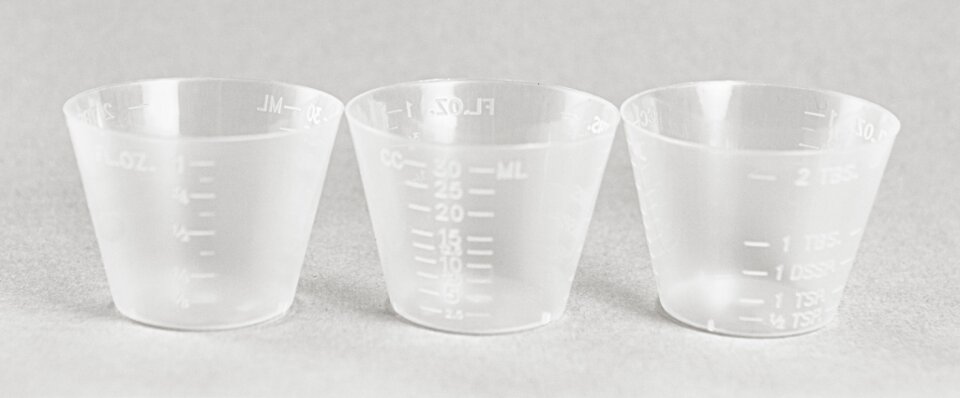
- Follow the directions for diluting and shaking. Shake suspensions right before giving them.
- Hold the bottle with the label toward your palm so drips don't smear it.
Set the cup on a flat surface at eye level and measure at the base (bottom) of the meniscus, not the edges. It needs to be precise.
| Liquid | What's in it | Example |
|---|---|---|
| Elixir | Water, alcohol, sweetener and drug | Hydrocodone and acetaminophen (for pain) |
| Syrup | Water, concentrated sugar and drug | Valproic acid |
| Suspension | Fine particles that don't fully dissolve: shake it | Ampicillin, amoxicillin (antibiotics) |
| Solution | Drug dissolved in water or 0.9% sodium chloride | Furosemide |
Measuring devices
- Medicine cup: doses of 5 to 30 mL
- Oral syringe, calibrated dropper or medicine spoon: doses under 5 mL
- Teach clients to use a calibrated device, never a kitchen spoon: household spoons aren't a standard size.
Feeding tubes (nasogastric (NG), gastrostomy, jejunostomy)
- Use the liquid form when there is one, to avoid clogging.
- Ask the provider or pharmacist before crushing; don't crush the do-not-crush forms, and don't give sublingual drugs through the tube (give them under the tongue).
- Sit the client up (Fowler's, at least 30°) and verify tube placement (pH and look of the aspirate). Check residual; if it's over 250 mL, follow policy.
- Dissolve each crushed tablet or capsule's contents completely in 15 to 30 mL of water. Give each drug separately, and never mix drugs into the feeding.
- Flush with 15 to 30 mL of water before and after each drug, and finish with a final flush of 15 to 30 mL of warm sterile water.
- Let it flow by gravity or push gently with the syringe. Keep the head of the bed up for at least 1 hour afterward.
- If the tube clogs, first try irrigating gently with the right flush.
References give a final flush of 15 to 30 mL or 30 to 60 mL of water. Follow the provider's order and facility policy.
Which forms can go down the tube
- Ready as is: liquids go down the tube as they are.
- Not through the tube: buccal and sublingual tablets are still given in the mouth (cheek or under the tongue).
- Crush first: plain tablets are crushed, dissolved and given as a liquid.
- Open first: a soft gel capsule filled with liquid is punctured and squeezed out (or the contents drawn up), then diluted with water or another fluid the facility approves if needed. Some timed-release capsules can be opened into the feeding or water; check with pharmacy first.
- Never crush, ask for another form: enteric-coated tablets and timed-release tablets.
Quick check
Can you crush an extended-release tablet for a client who can't swallow?
No. Ask for another form (such as a liquid).
Where do you read a liquid dose in a medicine cup?
At eye level, at the bottom of the meniscus.
Which device for a 2.5 mL dose?
An oral syringe (or calibrated dropper or spoon): doses under 5 mL.
Which liquid must be shaken right before giving it?
A suspension.
A client takes a drug on an empty stomach. Breakfast is at 0800. When can you give it?
Between 0700 and 0730 (30 minutes to 1 hour before), or at 1000 or later (2 hours after).
Can medications be mixed into a tube feeding?
No. Give each one separately, flushing before and after.
Other routes
Skin, eyes, ears, nose, rectal, vaginal, inhaled and injections.
These routes are short here but still important: practice them in skills lab.
Topical and transdermal
- Lotions, creams and ointments usually act locally. Transdermal patches act systemically (through the skin into the blood).
- Wear gloves so you don't absorb the drug. Spread it with a gloved hand, a tongue blade or a cotton-tipped applicator, not bare fingers.
- Clean off old medication and debris first (soap and water, then pat dry). Use surgical asepsis on open wounds.
- Take off the old patch (or wipe off old nitroglycerin ointment, used for chest pain) before the new one goes on, so the doses don't stack into an overdose.
- Put patches on a clean, dry, hairless area and rotate sites to prevent irritation. Don't cut patches.
- Don't place a patch over an implanted device, such as a pacemaker.
- Some patches can cause burns if they aren't removed on time.
- Check for an adhesive allergy before applying one.
- Label the patch or dressing with the date, time and your initials; document where the old one came off and the new one went.
- Nitroglycerin ointment: measured in inches or centimeters on the paper strip that comes with it. Secure the strip to the skin; don't rub it in (it absorbs too fast).
- Older adults: thinner skin absorbs topical drugs faster (watch for toxicity); apply gently and remove patches slowly to avoid tearing skin.
Skin prep: references differ (wash with soap and water and dry, or clean with alcohol first). Follow facility policy.
Eye (ophthalmic)
- Eye drugs are sterile. Wipe drainage from the inner to the outer canthus first.
- Client sits up or lies supine, head tilted slightly back, looking up at the ceiling.
- Pull the lower lid down against the cheekbone to make a pocket. Hold the dropper 1 to 2 cm above and drop into the conjunctival sac, not onto the cornea. Don't touch the eye with the tip.
- Have the client close the eye gently (not squeeze). If they blink and it misses, repeat.
- Press gently on the nasolacrimal duct (inner corner) for 30 to 60 seconds to keep the drug from being absorbed into the body.
- More than one eye drug: wait at least 5 minutes between them.
- Ointment: a thin ribbon along the lower lid, from the inner to the outer canthus.
Ear (otic)
- Sterile drops are used in case the eardrum is ruptured. Warm them to room temperature (in your hands): cold drops cause dizziness and nausea.
- Clean only the outer ear; never push an applicator into the canal.
- Client sits up or lies on their side, affected ear up.
- Adults: pull the auricle (pinna) up and back to straighten the canal. Hold the dropper 1 cm above; don't touch the ear.
- Press gently on the tragus afterward (unless it hurts). Stay side-lying for 2 to 3 minutes.
- If a cotton ball is used, place it only in the outer part of the canal.
For adults, pull the auricle "upward and back" or "up and outward": both mean up. (Children under 3: down and back.)
Nose (nasal)
- Have the client blow their nose gently first. Use medical asepsis.
- Drops: client lies supine, head positioned so the drug reaches the right area; breathe through the mouth, stay supine and don't blow the nose for 5 minutes. Keep the dropper from touching the nares.
- Spray: client sits upright with the head slightly back. Prime the spray if needed, aim the tip toward the outer side of the nostril (not the middle of the nose), and spray while the client breathes in through the nose. No nose-blowing for several minutes.
- Long-term decongestant spray use causes rebound congestion (swelling gets worse).
Rectal suppositories
- Not for clients after rectal surgery or with active rectal bleeding.
- Keep suppositories refrigerated. Don't cut them to split a dose: the drug may not be spread evenly.
- Position: left lateral (left Sims'). Gloves, clean technique; lubricate the rounded end with water-soluble lubricant. Have the client breathe slowly through the mouth to relax the sphincter.
- Insert it past the internal anal sphincter, against the rectal wall, not into stool.
- Client stays flat or on the left side for at least 5 minutes.
Vaginal
- Position: supine with knees bent and feet flat near the hips (dorsal recumbent). Provide perineal care if needed.
- Insert along the back (posterior) wall: suppositories 7.5 to 10 cm (3 to 4 in); creams, jellies and foams 5 to 7.5 cm (2 to 3 in).
- A perineal pad can catch extra drainage. Wash a reusable applicator with soap and water.
- Teach: use the full course, even during menstruation; no intercourse until an antifungal course is done.
How long to stay supine afterward: at least 5 minutes or about 10 minutes (references differ).
Inhaled
MDI (metered-dose inhaler)
- Shake it 5 or 6 times
- Breathe out, then close the lips around the mouthpiece (or hold it 2 to 4 cm away)
- Press as you start a slow, deep breath in (3 to 5 seconds)
- Hold the breath 10 seconds, then breathe out slowly through pursed lips
- Wait at least 1 minute between puffs
- Spacer: for clients who have trouble timing the puff with the breath; more drug reaches the lungs, less stays in the mouth
DPI (dry-powder inhaler)
- Don't shake it
- Load the dose per the directions
- Breathe out completely (not into the device), then take a deep breath in through the mouth
- Hold the breath 5 to 10 seconds
- Wait as long as the provider says between puffs
- Corticosteroid inhaler: rinse the mouth with water (or brush teeth) afterward to prevent thrush (oral candidiasis, a fungal mouth infection).
- Nebulizer: turns liquid drug into a mist the client breathes in for a few minutes; use an aerosol mask if the client can't hold the mouthpiece.
MDI: Mix it (shake). DPI: Don't shake.
Injections
| Route | Use | Needle | Angle | Volume |
|---|---|---|---|---|
| Intradermal (ID) | TB (tuberculosis) skin tests, allergy tests | 25 to 27 gauge, 1/4 to 5/8 in, tuberculin syringe | 10° to 15°, bevel up; a small bleb forms; don't massage | 0.01 to 0.1 mL |
| Subcutaneous | Small doses of nonirritating, water-soluble drugs: insulin (lowers blood glucose), heparin (an anticoagulant) | 25 to 31 gauge, 3/8 to 5/8 in | 45° to 90° (90° for clients with obesity); pinch up the skin | No more than 1.5 mL |
| Intramuscular (IM) | Irritating drugs, oils, suspensions | 18 to 25 gauge, 5/8 to 1.5 in | 90° | Usually 1 to 3 mL; split larger doses into two sites |
Gauge works backward: the bigger the gauge number, the smaller (thinner) the needle, and the smaller the number, the bigger the needle. A 25 gauge is thinner than an 18 gauge.
- IM sites: ventrogluteal is preferred (and for more than 2 mL). The deltoid holds only 1 mL. The vastus lateralis is used for infants and toddlers. The dorsogluteal isn't recommended: it's close to the sciatic nerve.
- Subcutaneous sites: abdomen, upper hips, back of the upper arms, thighs (enough fat).
- Z-track for IM drugs that irritate or stain the skin (iron): keeps the drug from leaking back into the tissue.
- Use a tuberculin syringe for volumes under 0.5 mL, and an insulin syringe for insulin.
- Rotate sites and document each one. Avoid sites that are swollen, inflamed, or have moles, birthmarks or scars.
- Throw away sharps in a puncture-proof container.
- Injections: advantages are faster, more reliable absorption and depot (long-acting) forms; disadvantages are cost, pain, tissue or nerve damage, and infection.
IV
- Fastest onset; immediate absorption; precise control; large volumes; dilutes irritating drugs.
- Because it's immediate, a wrong dose or drug is dangerous: monitor the client right away. Risks: infection and embolism, phlebitis and infiltration.
- Usual catheter sizes: 16 gauge for trauma, 18 gauge for surgery and blood, 22 to 24 gauge for older adults, children and stable clients.
Epidural
Opioid analgesia (morphine, fentanyl) through a catheter in the epidural space, on an infusion pump. Watch for hypotension and respiratory depression.
Quick check
Where do eye drops go?
Into the conjunctival sac (lower lid pocket), not onto the cornea.
How do you straighten an adult's ear canal?
Pull the auricle up and back.
What do you do with the old transdermal patch?
Remove it before applying the new one, at a different site.
Which inhaler do you shake: MDI or DPI?
MDI. Don't shake a DPI.
Which IM site is preferred, and which one should you avoid?
Ventrogluteal is preferred; avoid the dorsogluteal (close to the sciatic nerve).
What should you see after an intradermal injection, and should you massage it?
A small bleb; don't massage the site.
A client uses a steroid inhaler. What should they do afterward?
Rinse the mouth with water to prevent thrush.
Med math
Oral, weight-based, safe-dose and IV calculations.
What's in this section
- Converting units (metric and household)
- Equivalent doses (the same dose in g, mg or mcg)
- Tablets and capsules
- Liquids and injections
- Weight and doses by weight
- Splitting a daily dose
- Checking a safe dose
- Pump rates (mL/hr)
- Drip rates by gravity (gtt/min, drops per minute)
- Medication drips (units/hr, units/kg/hr)
The basics from Week 9 (the 24-hour clock, the three setup methods, rounding) are in the Week 9 guide. Each example below is worked one step at a time.
The three setup methods
Doses from a tablet or a liquid, and IV problems with several steps, are set up three ways below. You only need one: pick the method you use and follow that row. Every method gives the same answer. Converting units, equivalent doses and weight conversions are plain multiply or divide; every other type below shows all three setups.
HaveQuantity = DesiredX
X = DesiredHave × Quantity
gtt/min = Volume (mL) × drop factor (gtt/mL)Time (min)
Used for drip rates, which have no have and quantity; it takes the place of desired over have there. Pump rates use the same idea: mL/hr = volume (mL) ÷ time (hr).
X = QuantityHave × Desired1 (units cancel top and bottom)
Rounding
Know your rounding. When a problem names the place to round to, use that place; the defaults below cover the rest.
| Step | Dose under 1 | Dose over 1 |
|---|---|---|
| 1. Pick the place | Hundredth (two decimal places) | Tenth (one decimal place) |
| 2. Look one digit to the right |
|
|
- Leading zero always: write 0.5, never .5.
- No trailing zero: write 5, never 5.0.
- Round only at the end. Carry the unrounded numbers (such as the weight in kg) all the way through.
- On the practice quizzes, type only the number; the unit is shown beside the box.
Conversions to know
| Weight | Volume |
|---|---|
|
|
Some conversion lists still include grains (1 gr = 60 mg). Grains are an old apothecary measure that safe-abbreviation lists tell nurses to avoid (see Week 9), so this guide leaves them out.
Converting units
Bigger unit to smaller: multiply
- 1 g = 1,000 mg, so 0.5 g × 1,000 = 500 mg
- 1 mg = 1,000 mcg, so 0.2 mg × 1,000 = 200 mcg
- 1 Tbsp = 15 mL, so 2 Tbsp × 15 = 30 mL
- 1 kg = 2.2 lb, so 70 kg × 2.2 = 154 lb
Smaller unit to bigger: divide
- 1 mg = 1,000 mcg, so 250 mcg ÷ 1,000 = 0.25 mg
- 1 g = 1,000 mg, so 1,500 mg ÷ 1,000 = 1.5 g
- 1 tsp = 5 mL, so 20 mL ÷ 5 = 4 tsp
- 1 kg = 2.2 lb, so 176 lb ÷ 2.2 = 80 kg
Check it: going to a smaller unit, the number gets bigger (0.5 g is 500 mg); going to a bigger unit, the number gets smaller.
Give 4 Tbsp of a medication. How many mL?
- 1 Tbsp = 15 mL. Tbsp to mL is bigger to smaller, so multiply
- 4 × 15 = 60
Answer: 60 mL
Give 30 mL of a medication. How many Tbsp?
- 1 Tbsp = 15 mL. mL to Tbsp is smaller to bigger, so divide
- 30 ÷ 15 = 2
Answer: 2 Tbsp
Equivalent doses
The same dose written in a different metric unit. Use 1 g = 1,000 mg and 1 mg = 1,000 mcg: going to a smaller unit, multiply; going to a bigger unit, divide.
Give 2.5 mg of a medication. How many mcg is that?
- 1 mg = 1,000 mcg. mg to mcg is bigger to smaller, so multiply
- 2.5 × 1,000 = 2,500
Answer: 2,500 mcg
Give 250 mcg of a medication. How many mg is that?
- 1 mg = 1,000 mcg. mcg to mg is smaller to bigger, so divide
- 250 ÷ 1,000 = 0.25
- Leading zero: 0.25, not .25
Answer: 0.25 mg
Tablets and capsules
Set it up with whichever of the three methods you use.
Give 1,000 mg of metformin (a diabetes medication) PO. You have 500 mg tablets. How many tablets?
- Have = 500 mg, quantity = 1 tablet, desired = 1,000 mg
500 mg1 tablet = 1,000 mgX → 500X = 1,000 → X = 2
1,000 mg500 mg × 1 tablet = 2
X tablets = 1 tablet500 mg × 1,000 mg1 = 2
Makes sense: two 500 mg tablets make 1,000 mg.
Answer: 2 tablets
Give cefadroxil (an antibiotic) 1.5 g PO. You have 500 mg capsules. How many capsules? Round to the nearest whole number.
- g and mg don't match. 1 g = 1,000 mg, so 1.5 g × 1,000 = 1,500 mg (dimensional analysis does this inside the chain)
500 mg1 capsule = 1,500 mgX → 500X = 1,500 → X = 3
1,500 mg500 mg × 1 capsule = 3
X capsules = 1 capsule500 mg × 1,000 mg1 g × 1.5 g1 = 3
Answer: 3 capsules
Liquids and injections
Same setup, but the quantity is the volume on the label (such as 5 mL).
Give 300 mg of ibuprofen (for pain) PO. You have ibuprofen oral suspension 100 mg/5 mL. How many mL?
- Have = 100 mg, quantity = 5 mL, desired = 300 mg
100 mg5 mL = 300 mgX → 100X = 1,500 → X = 15
300 mg100 mg × 5 mL = 15
X mL = 5 mL100 mg × 300 mg1 = 15
Makes sense: 300 mg is three times 100 mg, so three times 5 mL.
Answer: 15 mL
Give heparin (an anticoagulant) 4,000 units subcutaneously. You have heparin 5,000 units/mL. How many mL? Round to the nearest tenth.
- Have = 5,000 units, quantity = 1 mL, desired = 4,000 units
5,000 units1 mL = 4,000 unitsX → 5,000X = 4,000 → X = 0.8
4,000 units5,000 units × 1 mL = 0.8
X mL = 1 mL5,000 units × 4,000 units1 = 0.8
Leading zero: 0.8, not .8. Makes sense: less than the 5,000 units in 1 mL, so less than 1 mL.
Answer: 0.8 mL
Weight conversions
Two numbers do all the work here: 16 oz in 1 lb and 2.2 lb in 1 kg. Change ounces to pounds first, then pounds to kilograms.
- kg to lb: multiply by 2.2. lb to kg: divide by 2.2. The kilogram number is always the smaller one.
- Some doses are based on the client's admission weight. Weight can change during a stay; if you aren't sure which weight the provider used, ask.
A client weighs 68.3 kg. How many pounds? Round to the nearest tenth.
- kg to lb: multiply by 2.2
- 68.3 × 2.2 = 150.26
- Round to the nearest tenth: the hundredths digit is 6, so round up
Answer: 150.3 lb
A client weighs 132 lb 5 oz. How many pounds? Round to the nearest tenth.
- Ounces to pounds: divide by 16. 5 ÷ 16 = 0.3125
- Add the pounds: 132 + 0.3125 = 132.3125
- Round to the nearest tenth: the hundredths digit is 1, so leave it
Answer: 132.3 lb
A client weighs 143 lb 11 oz. How many kilograms? Round to the nearest tenth.
- Ounces to pounds: 11 ÷ 16 = 0.6875, so 143.6875 lb (don't round yet)
- Pounds to kilograms: divide by 2.2. 143.6875 ÷ 2.2 = 65.3125
- Round to the nearest tenth: the hundredths digit is 1, so leave it
Answer: 65.3 kg
Doses by weight
- Why: the dose fits the client's size, so it's enough to work without building up to a toxic level.
- Who: most children's doses, plus some adult medications (for example the anticoagulant enoxaparin and the antibiotics vancomycin and amoxicillin).
- How: weight in kg × the ordered amount per kg.
A client is ordered cefuroxime (an antibiotic) oral suspension 20 mg/kg/day and weighs 62 kg. How many mg a day?
- Already in kg. Have = 1 kg, quantity = 20 mg, desired = 62 kg
20 mg1 kg = X62 kg → X = 1,240
62 kg1 kg × 20 mg = 1,240
X mg/day = 20 mg1 kg · day × 62 kg1 = 1,240
Answer: 1,240 mg/day
Enoxaparin (an anticoagulant) 1 mg/kg subcutaneously every 12 hours. The client weighs 163 lb. How many mg per dose? Round to the nearest whole number.
- Pounds to kilograms: 163 ÷ 2.2 = 74.0909… kg (don't round yet; dimensional analysis does this inside the chain)
1 mg1 kg = X74.0909… kg → X = 74.0909…
74.0909… kg1 kg × 1 mg = 74.0909…
X mg = 1 mg1 kg × 1 kg2.2 lb × 163 lb1 = 74.0909…
Round to the nearest whole number: the tenths digit is 0, so leave it.
Answer: 74 mg
Splitting a daily dose
- Work out the total dose for 24 hours.
- Divide it by the number of doses a day.
Doses a day = 24 ÷ the hours between doses: every 6 hr = 4 doses, every 8 hr = 3, every 12 hr (BID, twice a day) = 2.
Cephalexin (an antibiotic) 50 mg/kg/day PO in 3 divided doses. The client weighs 71 kg. (1) mg a day? (2) mg per dose, rounded to the nearest whole number?
- (1) mg a day, then (2) split the day into 3 doses
(1) 50 mg1 kg = X71 kg → X = 3,550
(2) 3,550 mg3 doses = X1 dose → 3X = 3,550 → X = 1,183.33…
(1) 71 kg1 kg × 50 mg = 3,550
(2) 1 dose3 doses × 3,550 mg = 1,183.33…
(1) X mg/day = 50 mg1 kg · day × 71 kg1 = 3,550
(2) X mg/dose = 3,550 mg1 day × 1 day3 doses = 1,183.33…
Round to the nearest whole number: the tenths digit is 3, so leave it.
Answer: 3,550 mg/day; 1,183 mg per dose
A medication is ordered at 3 mg/kg/day, given BID. The client weighs 185 lb. (1) mg in 24 hours? (2) mg per dose? Round each to the nearest whole number.
- Pounds to kilograms: 185 ÷ 2.2 = 84.0909… kg (don't round yet; dimensional analysis does this inside the chain)
- (1) mg a day, then (2) per dose (BID = 2 doses), carrying the unrounded day total
(1) 3 mg1 kg = X84.0909… kg → X = 252.27…
(2) 252.27… mg2 doses = X1 dose → 2X = 252.27… → X = 126.13…
(1) 84.0909… kg1 kg × 3 mg = 252.27…
(2) 1 dose2 doses × 252.27… mg = 126.13…
(1) X mg/day = 3 mg1 kg · day × 1 kg2.2 lb × 185 lb1 = 252.27…
(2) X mg/dose = 252.27… mg1 day × 1 day2 doses = 126.13…
Round each to the nearest whole number: 252.27… rounds to 252, and 126.13… rounds to 126.
Answer: 252 mg/day; 126 mg per dose
A medication is ordered at 30 mg/kg/day PO, divided every 8 hours. The client weighs 190 lb. Available: the medication 125 mg/5 mL. How many mL per dose? Round to the nearest whole number.
- Weight: 190 lb ÷ 2.2 = 86.3636… kg (don't round yet)
- Total a day: 86.3636… kg × 30 mg/kg = 2,590.909… mg
- Every 8 hours = 3 doses: 2,590.909… ÷ 3 = 863.636… mg per dose
- mL per dose (dimensional analysis can do all of this in one chain):
125 mg5 mL = 863.63… mgX → 125X = 4,318.18… → X = 34.545…
863.63… mg125 mg × 5 mL = 34.545…
X mL = 5 mL125 mg × 30 mg1 kg · day × 1 day3 doses × 1 kg2.2 lb × 190 lb1 = 34.545…
Now round to the nearest whole number: the tenths digit is 5, so round up.
Answer: 35 mL per dose
Checking a safe dose
Doses can vary with age, weight, diagnosis, condition and route. Check every dose against a current drug reference:
- Look up the recommended dose or range, and note whether it's per dose or per day.
- If it's by weight, convert the weight to kg and multiply by the low and the high end.
- Put the ordered dose in the same terms (per dose or per day) and compare.
- Above the range: unsafe, hold it and contact the provider. Below the range: may not work (nontherapeutic), so check with the provider too.
Reference: medication X 10 to 20 mg IM every 6 hours, no more than 80 mg in a day.
- Order: 20 mg IM q4h PRN. Every 4 hours is up to 6 doses a day
20 mg1 dose = X6 doses → X = 120
6 doses1 dose × 20 mg = 120
X mg/day = 20 mg1 dose × 6 doses1 day = 120
120 mg/day is over 80 mg/day: not safe.
- Order: 10 mg IM q6h PRN. Every 6 hours is 4 doses a day
10 mg1 dose = X4 doses → X = 40
4 doses1 dose × 10 mg = 40
X mg/day = 10 mg1 dose × 4 doses1 day = 40
Each dose is in the 10 to 20 mg range and the day stays under 80 mg: safe.
Every 4 hours is more often than the every 6 hours in the reference. The daily limit is what makes the 20 mg order unsafe; if an order's frequency doesn't match the reference, check with the provider.
Cephalexin (an antibiotic), adults: 250 to 500 mg every 6 hours. What's the daily safe dose range?
- Every 6 hours = 4 doses a day. Work out the low end, then the high end
Low: 250 mg1 dose = X4 doses → X = 1,000
High: 500 mg1 dose = X4 doses → X = 2,000
Low: 4 doses1 dose × 250 mg = 1,000
High: 4 doses1 dose × 500 mg = 2,000
Low: X mg/day = 250 mg1 dose × 4 doses1 day = 1,000
High: X mg/day = 500 mg1 dose × 4 doses1 day = 2,000
Answer: 1,000 to 2,000 mg/day
A client is ordered 450 mg of medication X oral suspension. The safe range is 10 to 20 mg/kg/dose, and the client weighs 31.4 kg. (1) The safe dose range, rounded to the nearest tenth? (2) Is the order safe?
- Work out the low end, then the high end
Low: 10 mg1 kg = X31.4 kg → X = 314
High: 20 mg1 kg = X31.4 kg → X = 628
Low: 31.4 kg1 kg × 10 mg = 314
High: 31.4 kg1 kg × 20 mg = 628
Low: X mg = 10 mg1 kg × 31.4 kg1 = 314
High: X mg = 20 mg1 kg × 31.4 kg1 = 628
Compare: the order (450 mg) is between the low and high ends.
Answer: 314 to 628 mg per dose; 450 mg is safe
Pump rates (mL/hr)
An infusion pump runs in mL per hour: Volume (mL)Time (hr). If the time is in minutes, change it to hours (÷ 60) or multiply by 60 min1 hr.
Infuse LR (lactated Ringer's) 900 mL over 8 hours. Set the pump to how many mL/hr? Round to the nearest whole number.
- Volume = 900 mL, time = 8 hr
900 mL8 hr = X mL1 hr → 8X = 900 → X = 112.5
mL/hr = 900 mL8 hr = 112.5
X mL/hr = 900 mL8 hr = 112.5
Round to the nearest whole number: the tenths digit is 5, so round up.
Answer: 113 mL/hr
Ceftriaxone (an antibiotic) 1 g in 50 mL 0.9% sodium chloride over 35 minutes. How many mL/hr? Round to the nearest whole number.
- Volume = 50 mL, time = 35 min. For the formula, change minutes to hours: 35 ÷ 60 = 0.5833… hr (don't round yet)
50 mL35 min = X mL60 min → 35X = 3,000 → X = 85.71…
mL/hr = 50 mL0.5833… hr = 85.71…
X mL/hr = 50 mL35 min × 60 min1 hr = 85.71…
Round to the nearest whole number: the tenths digit is 7, so round up.
Answer: 86 mL/hr
Drip rates by gravity (gtt/min)
Without a pump, the nurse sets the roller clamp and counts the drops falling in the drip chamber for 1 minute. The drop factor (gtt/mL) is on the tubing package.
gtt/min = Volume (mL) × drop factor (gtt/mL)Time (min)
Infuse LR (lactated Ringer's) 1,000 mL over 12 hours. The drop factor is 20 gtt/mL. How many gtt/min? Round to the nearest whole number.
- For the formula or ratio and proportion, change hours to minutes: 12 hr × 60 = 720 min
1,000 mL720 min = X mL1 min → X = 1.3888… mL/min → 1.3888… mL/min × 20 gtt/mL = 27.77…
gtt/min = 1,000 mL × 20 gtt/mL720 min = 27.77…
X gtt/min = 20 gtt1 mL × 1,000 mL12 hr × 1 hr60 min = 27.77…
Round to the nearest whole number: the tenths digit is 7, so round up.
Answer: 28 gtt/min
You can't give half a drop, so gtt/min is always a whole number.
Medication drips
Some drips are ordered by weight per hour (such as units/kg/hr). Work out the dose per hour, then the mL per hour from the bag's concentration.
Heparin (an anticoagulant) infusion at 12 units/kg/hr. The client weighs 198 lb. Available: heparin 25,000 units in 500 mL. How many mL/hr? Round to the nearest whole number.
- Weight: 198 lb ÷ 2.2 = 90 kg
- Dose per hour: 90 kg × 12 units/kg/hr = 1,080 units/hr (dimensional analysis can skip these two steps)
25,000 units500 mL = 1,080 unitsX → 25,000X = 540,000 → X = 21.6
1,080 units25,000 units × 500 mL = 21.6
X mL/hr = 500 mL25,000 units × 12 units1 kg · hr × 1 kg2.2 lb × 198 lb1 = 21.6
Round to the nearest whole number: the tenths digit is 6, so round up.
Answer: 22 mL/hr
Quick check
0.9% NS (normal saline) 250 mL over 3 hours. Pump rate? Round to the nearest whole number.
250 ÷ 3 = 83.33, so 83 mL/hr.
Medication X is recommended at 15 to 25 mg/kg once daily. The client weighs 120 lb and is ordered 1,500 mg. Safe?
120 ÷ 2.2 = 54.55 kg; range 818.2 to 1,363.6 mg. 1,500 mg is above it: not safe, so hold it and contact the provider.
20 mcg/kg ordered for a 72 kg client. How many mcg?
72 × 20 = 1,440 mcg.
3,000 mg a day PO in 4 divided doses. mg per dose?
3,000 ÷ 4 = 750 mg.
500 mg PO BID ordered; 125 mg/5 mL available. mL per dose?
500 ÷ 125 × 5 = 20 mL.
750 mg ordered; 250 mg tablets available. How many tablets?
3 tablets.
150 mL over 90 minutes with 60 gtt/mL tubing. gtt/min?
150 × 60 ÷ 90 = 100 gtt/min.
Heparin (an anticoagulant) 3,750 units subcutaneously; 5,000 units/mL available. mL? Round to the nearest tenth.
3,750 ÷ 5,000 = 0.75, so 0.8 mL.
Cefazolin (an antibiotic) 2 g in 100 mL 0.9% sodium chloride over 40 minutes, 15 gtt/mL tubing. gtt/min? Round to the nearest whole number.
100 × 15 ÷ 40 = 37.5, so 38 gtt/min.